
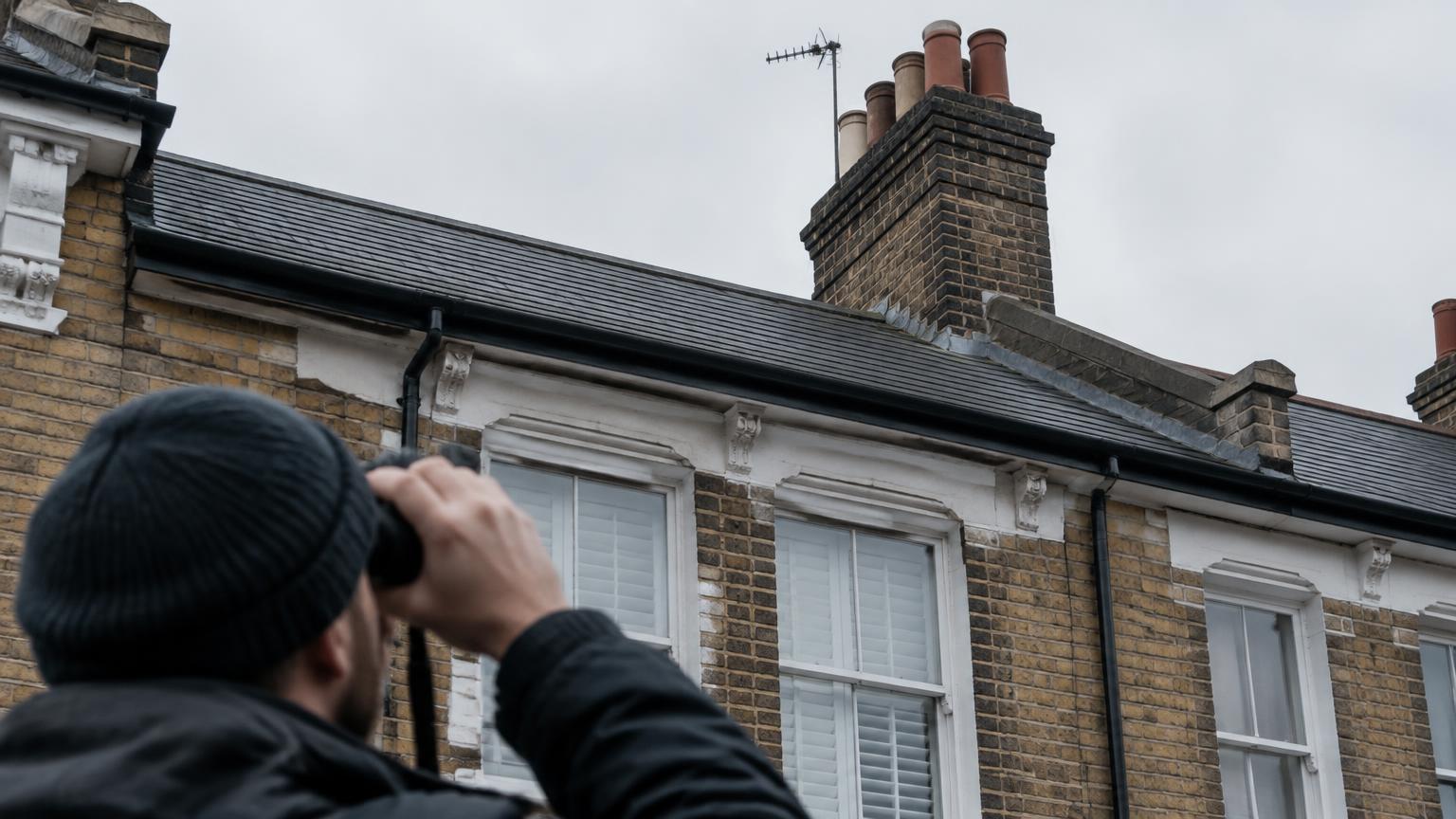
Outside: coverings and detailing
The surveyor looks at slates or tiles, ridges, hips and valleys, and the lead or mortar flashings where the roof meets walls and chimneys. Gutters and downpipes are noted where they affect the roof.
- Slipped, cracked or missing slates and tiles
- Worn or lifting flashings
- Chimney stacks, pots and flaunching
- Flat roof coverings on extensions and dormers
Inside: the roof space
Where the loft can be safely accessed, the surveyor inspects rafters, purlins and other visible timbers for movement, decay and signs of water getting in. Insulation and ventilation are noted because both affect condensation.
What the report gives you
You receive a written report with photographs, a plain-English description of condition and suggested next steps, such as repairs to budget for or questions to raise before exchange.
Where a visual inspection stops
A roof survey is non-invasive. Coverings are not lifted and concealed areas are not opened up, so some defects can remain hidden. Where a problem is suspected the report says what further investigation would help.
If you are buying, a roof survey sits alongside a RICS Home Survey rather than replacing it.