
Start with the right RICS survey
Your first decision is the survey that suits the whole property. A RICS Level 2 Home Survey suits conventional homes in reasonable condition. A RICS Level 3 Building Survey suits older, larger or altered homes. Both consider the roof, but only as far as it can be seen safely from the ground, from within the property and from an accessible loft.
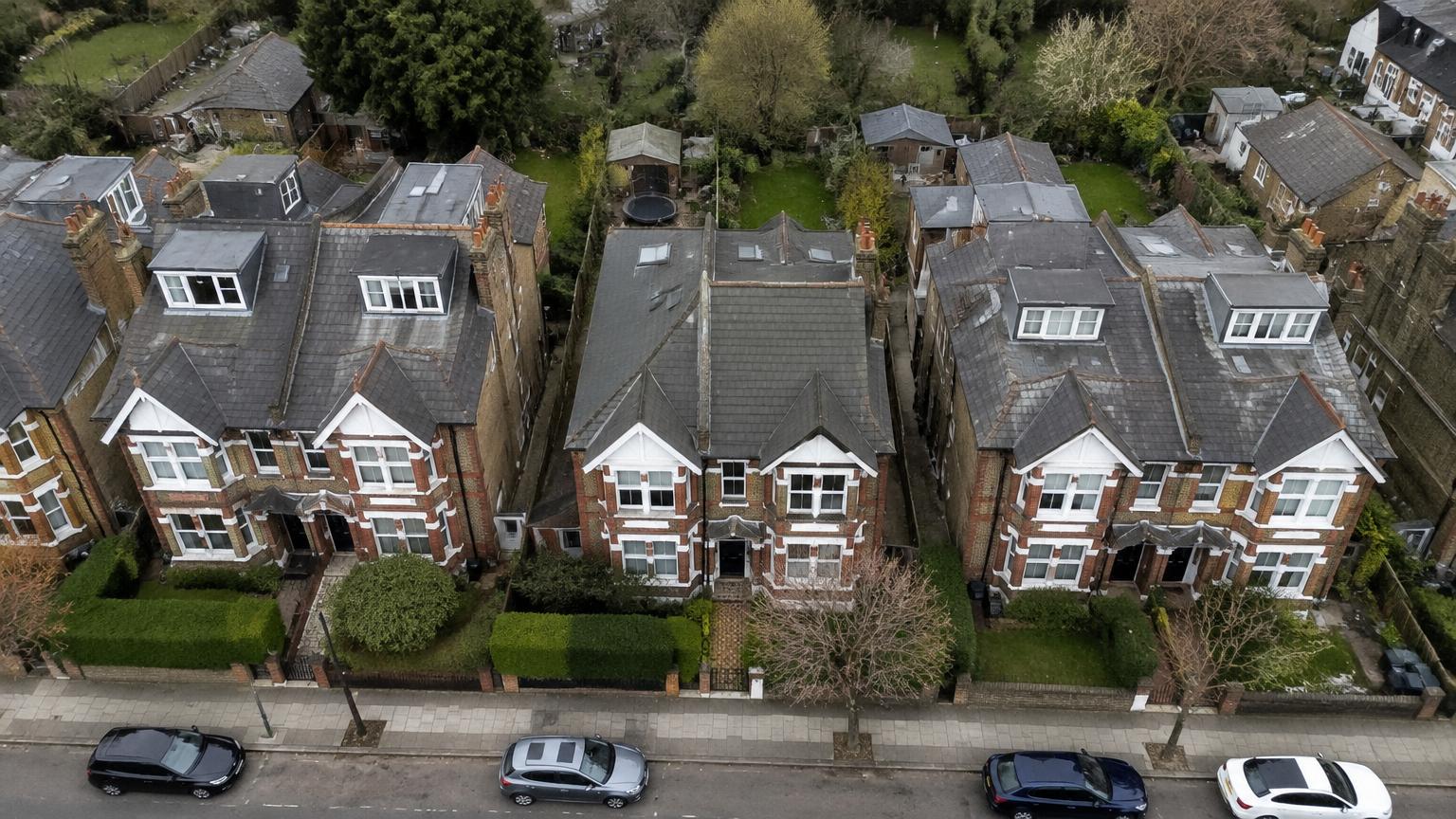
When a drone survey is worth considering
A drone survey can add useful detail when:
- The roof is hidden from the street, as with many London terraces
- The house is tall, with stacks and parapets you cannot see closely
- Your RICS survey has recommended a closer look at the roof
- There is visible staining on upper ceilings and you want to see the outside
- The roof has flat sections, valleys or dormers that are hard to see
- You want evidence of condition to help budget or discuss repairs with the seller
When it probably is not needed
For a newer home with a simple roof that can be seen well from the ground, or where the whole-property survey raises no roof concerns, a drone survey may add little. A surveyor can advise before you book.
What to expect
Aerial images are captured of the agreed areas where weather and airspace allow. An independent surveyor reviews the imagery and explains the visible observations and practical next steps. The inspection is visual only and does not see inside the roof space or beneath coverings.
Timing it in your purchase
Arrange a drone survey before exchange so there is time to act on the findings, such as getting repair quotes or discussing costs with the seller. Where the roof structure is also a concern, a roof survey can be booked alongside it.