
Why chimneys matter
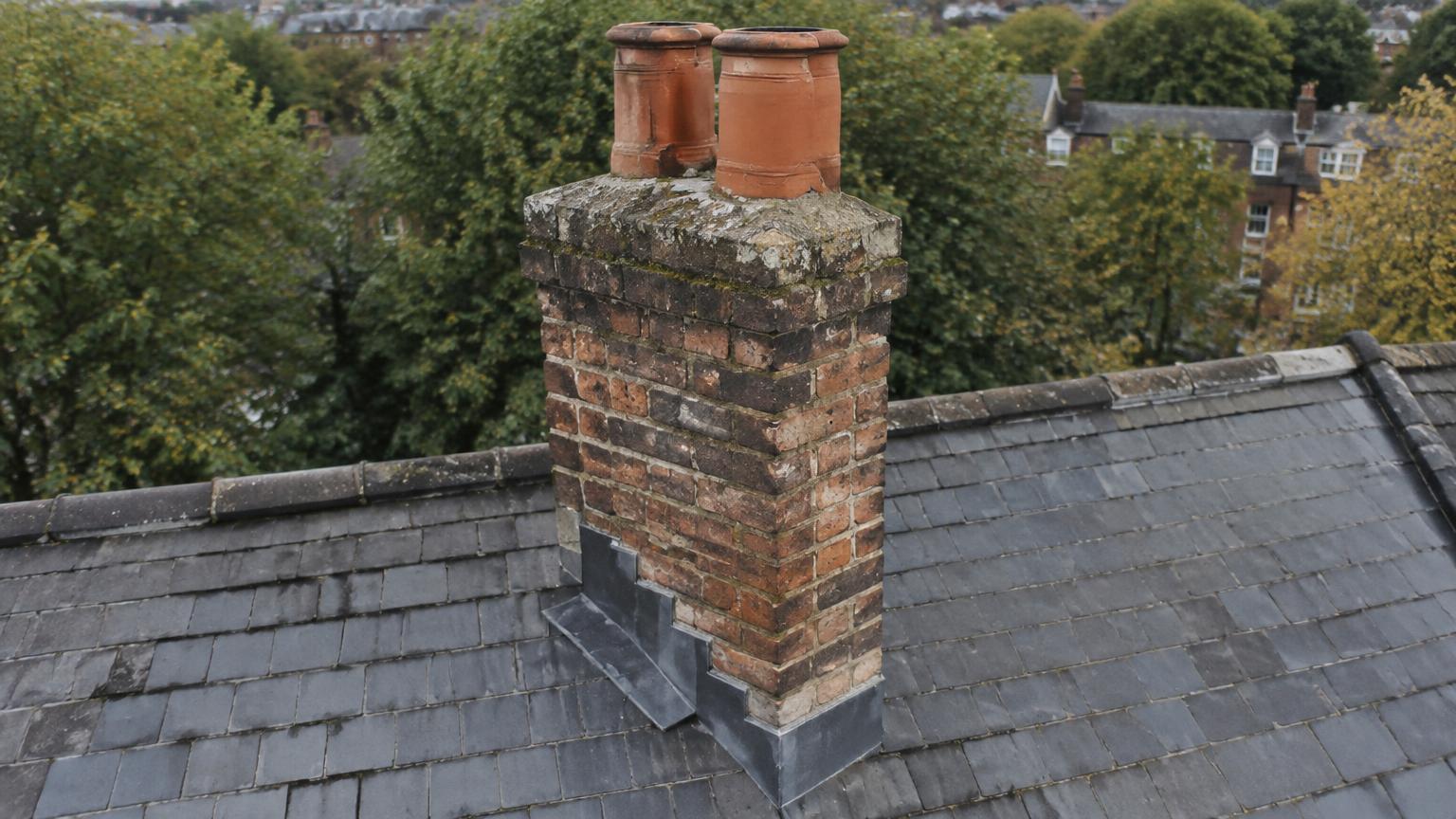
Many London homes have tall brick stacks that have been exposed to weather for over a century. Mortar erodes, pots crack and flashings fail. Because water can track down a stack into the roof space and rooms below, chimney defects are a common source of damp and staining on upper floors.
What a drone can help identify
Close aerial imagery can help identify visible issues such as:
- Eroded or missing mortar joints
- Cracked or damaged chimney pots
- Cracked flaunching around the pots
- Lifting, split or missing lead flashings
- Leaning or visibly distorted stacks
- Vegetation growing from the brickwork
What it cannot tell you
A drone inspection is visual. It cannot confirm whether a flue is safe to use, whether a stack is structurally stable, or what is happening inside the chimney breast. Where the imagery raises concerns, the surveyor will explain what further specialist checks may be sensible.
When a drone chimney inspection is useful
It is most useful when stacks cannot be seen closely from the ground, when you are buying a period home with an uncertain roof, after storms, or before paying for scaffolding for repairs. The images also give roofers a clear view of what needs quoting.
Combining with other surveys
If you see staining around a chimney breast inside, a roof survey can look at the accessible roof space around the stack for signs of water ingress. If you are buying, a RICS Level 2 or Level 3 survey considers the property as a whole.