
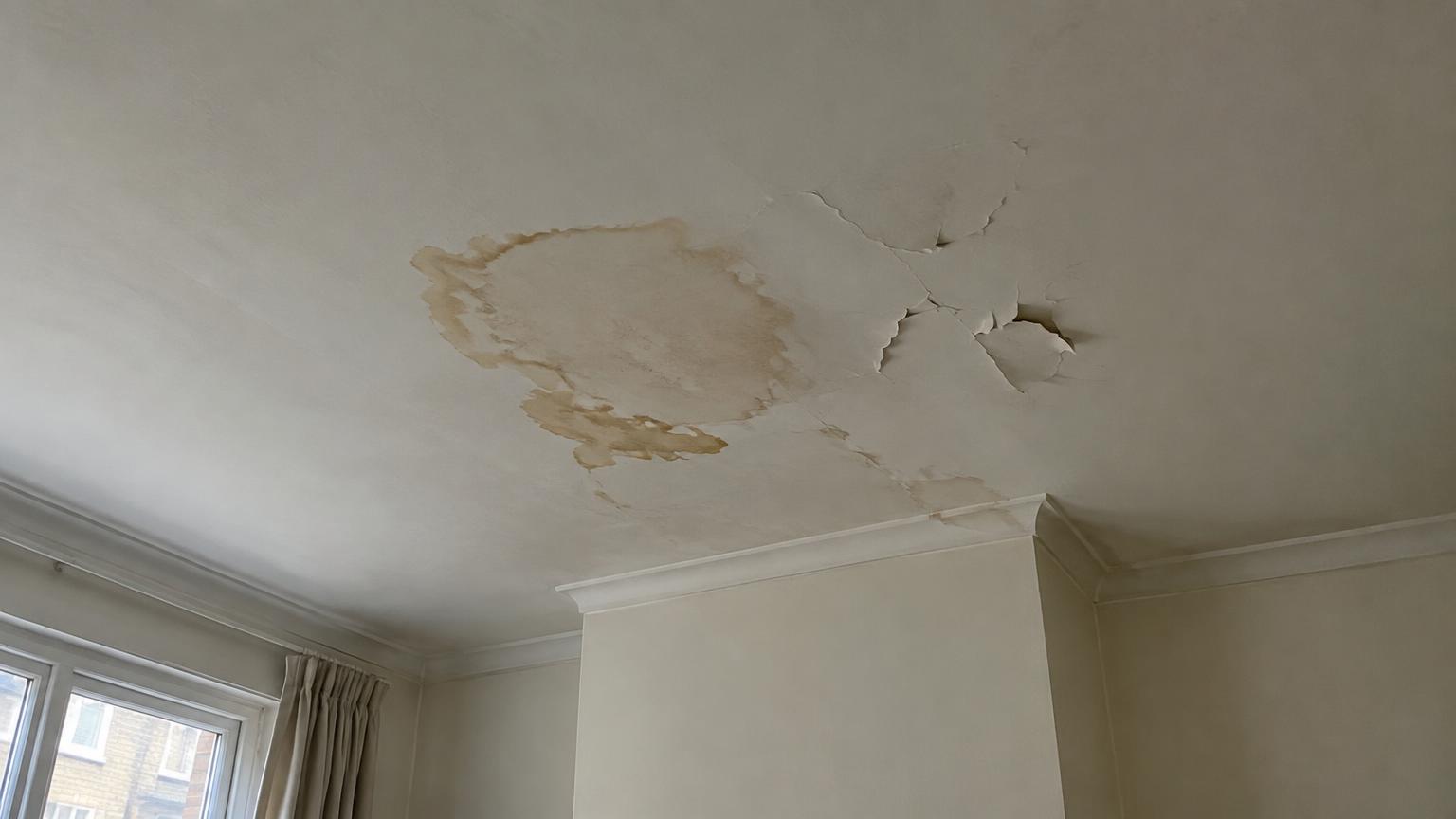
Where roof leaks usually start
Water most often gets in at junctions and details rather than across the open roof. Common entry points include:
- Chimney stacks and the flashings around them
- Valleys and hidden parapet gutters on terraced houses
- Slipped, cracked or missing slates and tiles
- Junctions between a main roof and an extension or dormer
- Blocked gutters that overflow against walls
Signs inside the home
On a viewing, look closely at top floor ceilings, the tops of walls and around chimney breasts. Brown tide marks, flaking paint, blown plaster and newly painted patches can all point to past or current water getting in. A musty smell in upper rooms is also worth noting.
Signs in the roof space
If the loft is accessible and safe, water staining on rafters and the underside of the roof, damp or compressed insulation, and daylight showing through the covering are clear warning signs. Dark or soft areas of timber may indicate longer-term dampness.
Old leak or active leak?
Staining can remain long after a leak has been repaired, so it is not always evidence of a current problem. The context matters: fresh decoration over a stain, damp timber or wet insulation suggests the issue may still be active. A surveyor can consider what is visible and explain what further checks would help.
What to do next
Ask the seller about any roof repairs and whether paperwork exists. If you are buying, your RICS survey will consider visible signs of water ingress. If the roof is the main concern, a roof survey gives a closer look at the accessible roof space and visible timbers, and a drone survey can add close external views of chimneys, valleys and coverings that cannot be seen from the ground.